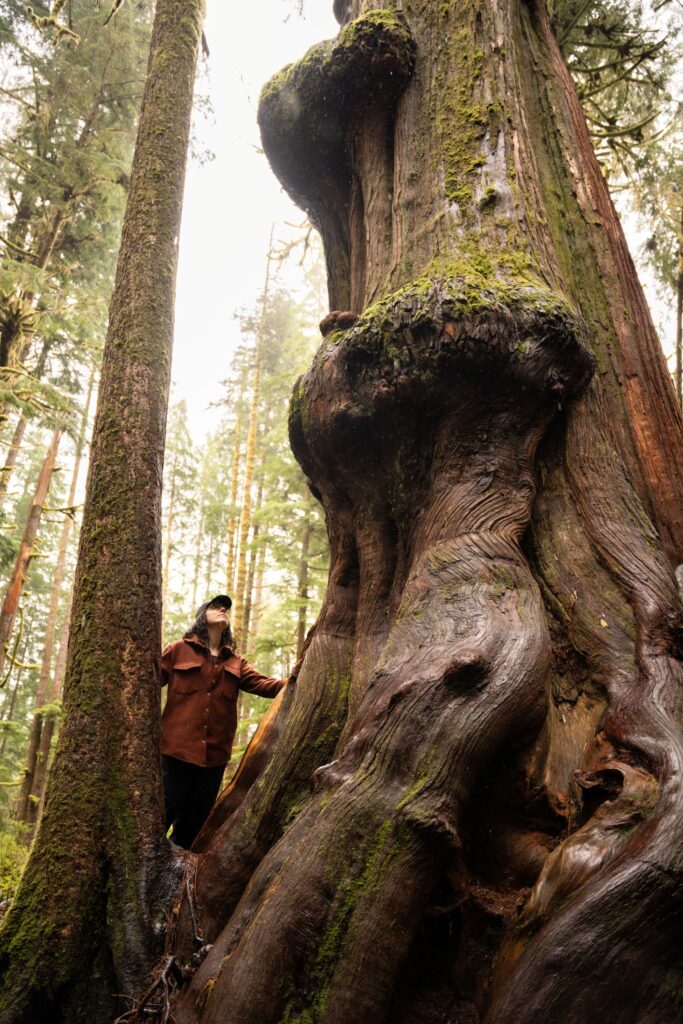
Looking closely at Industry’s “Forestry is a Solution” campaign
Stories
Looking closely at Industry’s “Forestry is a Solution” campaign
April, 2026
If we want long‑term security for workers, communities, and biodiversity, forestry must operate within the limits of nature, not override them.
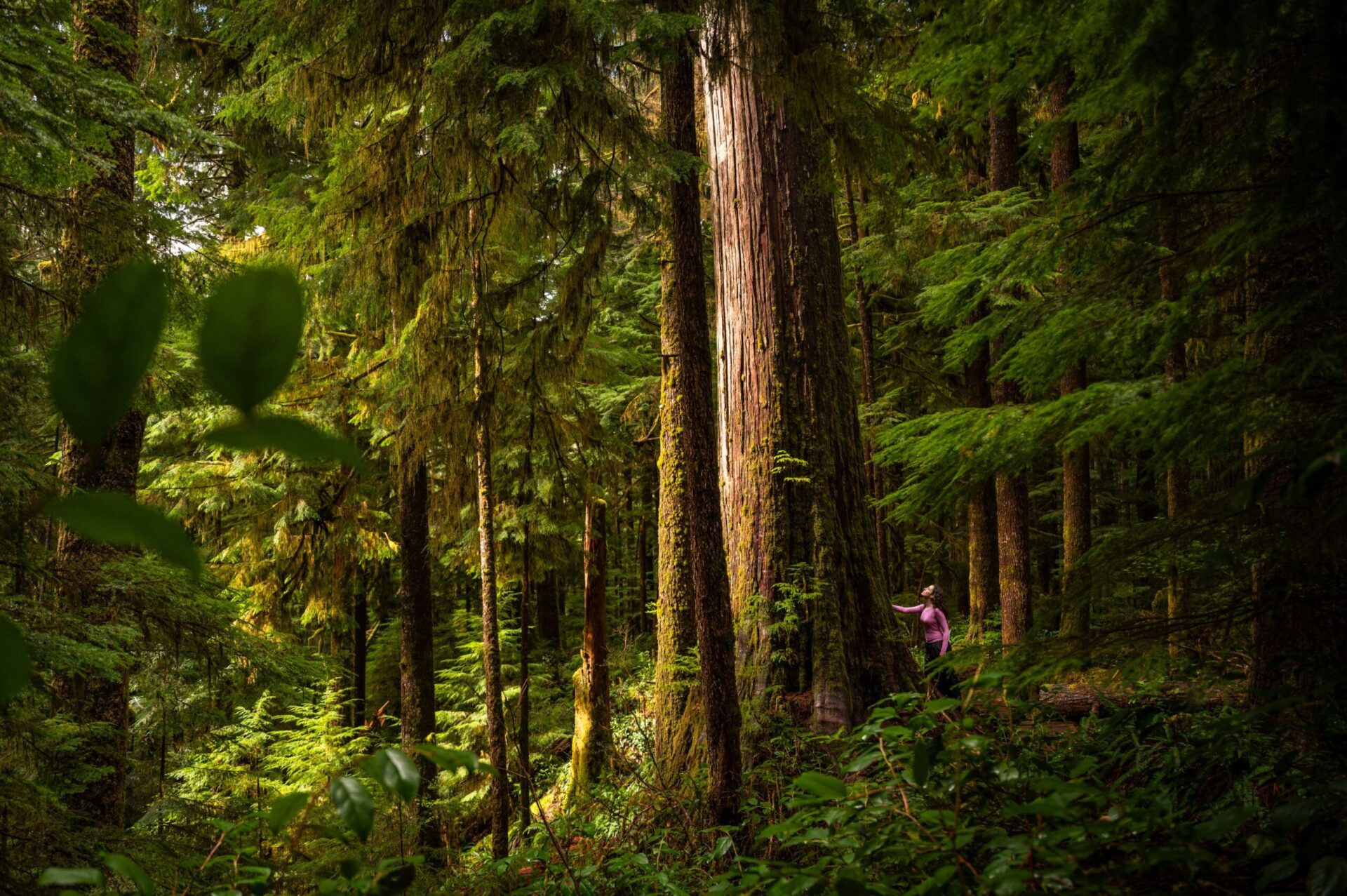
Photo by Mary Paquet/Sierra Club BC.
By David Quigg
We want to share a report‑back from the 2026 Council of Forest Industries (COFI) Conference recently held in Vancouver, and what it signals for the future of forests in this province.
The conference brought together forest industry leaders, government representatives, and lobbyists at a moment of profound ecological and economic uncertainty for B.C. The message from industry repeated over and over: “We want stable access to fibre.”
That phrase echoed through panel discussions, keynote talks, and informal conversations alike. In industry speak “fibre” means trees harvested at scale, predictably, and continuously. COFI was clear that it expects government policies, land‑use decisions, and public institutions to reorganize themselves around meeting this demand, and open up the entire province to industrial logging, regardless of the consequences for nature or communities.
But what was most striking was what was not said.
The Elephant in the Room: Nature Has Limits
At no point did conference speakers grapple with the reality that B.C.’s forest ecosystems are finite and degraded—“exhausted” was the term Premier Eby used when he called for a paradigm shift in his 2022 mandate letter to the Minister of Water Land and Resource Stewardship. Since then, Eby’s tone has shifted, but the reality on the land remains.
Decades of overharvest, clearcutting, road‑building, and short rotation forestry have already degraded the timber harvesting land base and less than three percent of high-productivity old growth (forest ecosystems with big trees) remain. Climate change has compounded this damage through drought, pests, and increasingly severe wildfire. Yet the industry’s core assumption remains that “more fibre” can somehow be found if only remaining constraints are removed.
There was no meaningful discussion about ecological carrying capacity at the conference. No accounting for ecosystem collapse. No acknowledgment that business‑as‑usual forestry has helped create the very crises industry now claims it can solve.
Instead, the “working forest” was repeatedly described as capable of supplying up to 45 million cubic metres of timber annually—a number that ignores ecological reality. Pushing toward that target will not stabilize the sector. It will accelerate the collapse of ecosystems and, ultimately, the forestry economy itself.
If we want long‑term security for workers, communities, and biodiversity, forestry must operate within the limits of nature, not override them.
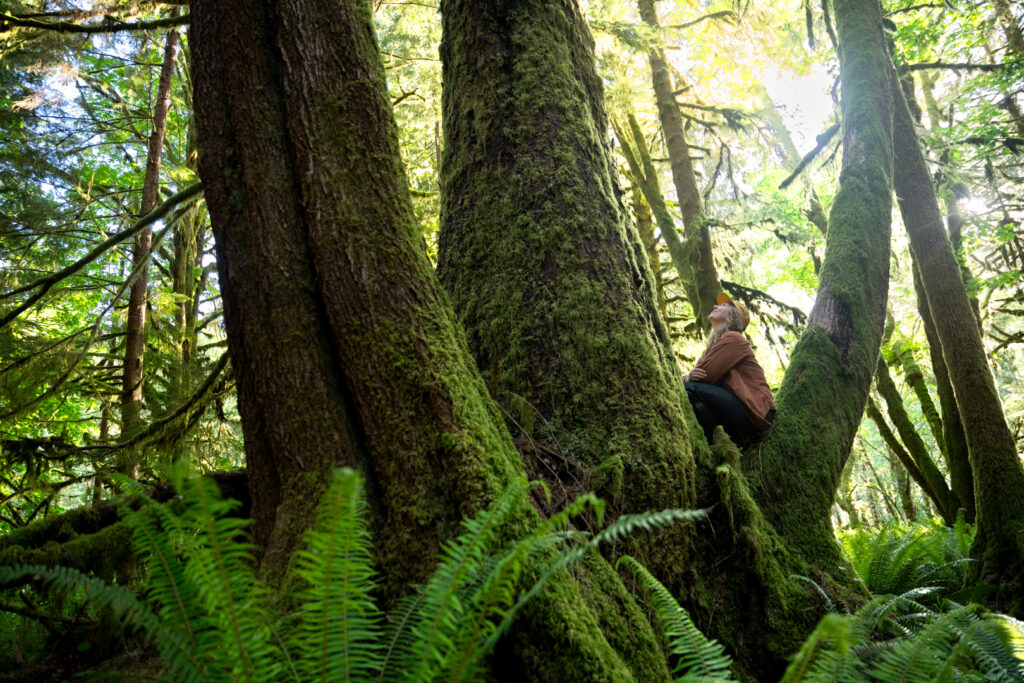
Photo by Mya Van Woudenberg/Sierra Club BC.
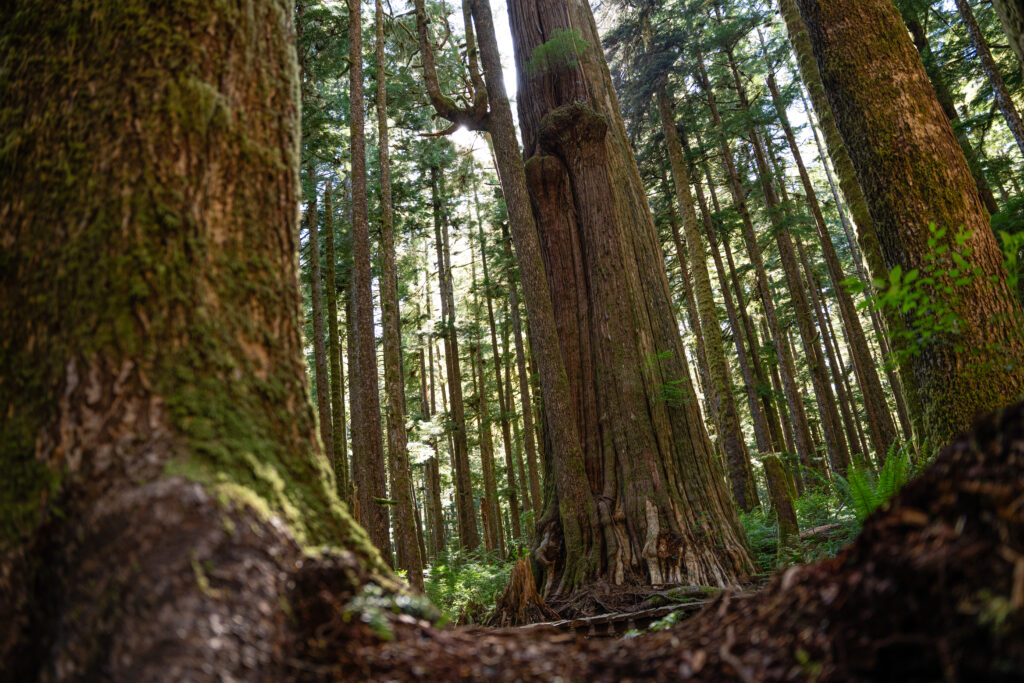
Photo by Mya Van Woudenberg/Sierra Club BC.
“Forestry is a Solution”
COFI chose the slogan “Forestry Is a Solution” for this conference and for their wider campaign. Among the solutions they name are reducing wildfire risks through “active forest management, family-sustaining jobs, and storing carbon.”
We all agree that we need a solution to these problems, but COFI’s remedy is no cure.
COFI’s platform would result in:
- Increased pressure on already degraded forests, biodiversity and watersheds
- Heightened wildfire risk in clearcut areas that quicky dry out
- Reduced long‑term water security and carbon storage
- Further destabilizing B.C.’s already exhausted long‑term timber supply
Our Intact Forests, Safe Communities report highlights that nine of 15 climate risks identified by the B.C. government are increased by industrial forestry practices, and they all impact local communities in devastating ways.
The Real Solution: Forest Recovery
Forestry is important to so many B.C. communities. We all share the goal of long‑term, stable employment, but we see that policies that accelerate unsustainable logging only make that harder to achieve.
Protecting old growth and restoring forest health is the only proven path to safeguarding:
- A diverse economy, including long-term jobs in tourism and forestry
- Drinking‑water reliability
- Flood and wildfire resilience by maintaining forest hydrology
- Biodiversity and carbon stored in resilient forests
Sierra Club BC will continue to Insist that forestry operate within ecological limits, defend old growth, parks and protected areas, and advocate for science‑based forest stewardship.
Industry is demanding “stable access to fibre.” We are demanding safe communities, healthy ecosystems, and a forestry sector that respects nature’s limits.
Those goals are not compatible with logging the last intact forests of this province.
Thank you for standing with us. Tell the B.C. government to respect nature’s limits and stop logging irreplaceable old growth.
Explore more stories
You can help protect healthy ecosystems
Donate today. Together, we can build a brighter future.