
Media Release
As the EU raises the standard for forest accountability, Canada’s official reporting still hides critical impacts
October 19, 2026
New report exposes six glaring omissions to make Canada’s forest management look far more sustainable than it is.
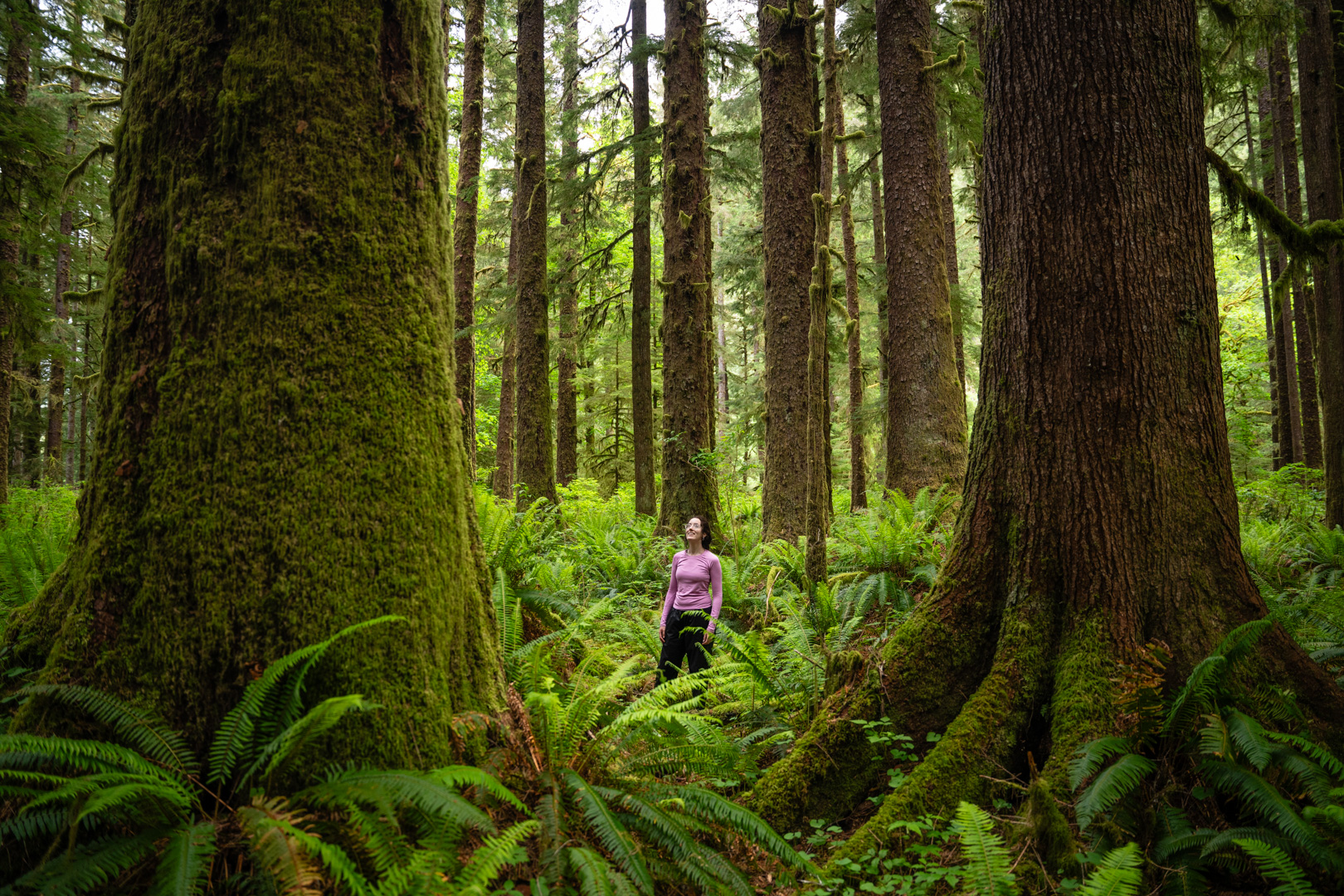
Photo by Mary Paquet.
FOR IMMEDIATE RELEASE
UNCEDED xʷməθkʷəy̓əm (MUSQUEAM), Sḵwx̱wú7mesh (SQUAMISH) AND səlilwətaɬ (TSLEIL-WAUTUTH) TERRITORIES/VANCOUVER – For decades, Canada’s close trading relationship with the United States has kept it locked in a race to the bottom of ever loosening environmental standards and declining regulatory effectiveness. Now our drive to broaden our horizons and forge new trading relationships around the world with partners like the EU who increasingly demand sustainably harvested forest products offer us an opportunity to create a forest industry that is both globally competitive and sustainable, but only if we are honest about its impact.
A new report released today by a coalition of conservation organizations reveals six critical indicators missing from Canada’s official forest reporting, raising serious questions about the government’s claims of sustainable forest management.
Missing Indicators Brief: State of the Forest (2026) finds that Natural Resources Canada continues to emphasize timber production, industry employment and harvest levels while leaving out essential information about forest degradation, biodiversity loss, Indigenous rights and greenhouse gas emissions.
The problem isn’t a lack of data
“Canada cannot keep calling its forests sustainably managed while failing to measure the damage being done to them,” says Rachel Plotkin of the David Suzuki Foundation. “If the government wants European partners to believe its claims, it needs to show the data, including data that doesn’t make the forestry industry look good.”
Among the findings the federal government is leaving out of its annual forest report:
- More than 22 million hectares of primary forest lost. Canada’s own reporting to the United Nations shows a decline of more than 22 million hectares of primary forest between 1990 and 2025. Yet primary forest loss is absent from the annual State of the Canada’s Forests report.
- Old-growth forests disappearing. In British Columbia, the majority of the estimated original old-growth forests has already been logged and only 15 percent of it is protected. A much smaller fraction of highly productive, big-tree old-growth remains standing and even less has protection.
- A long way from 30 by 30. Just 14 per cent of Canada’s land and nine per cent of its forests are protected, despite the federal commitment to protect 30 per cent of land and inland waters by 2030.
- Caribou habitat pushed past its limits. Every province with boreal caribou has ranges exceeding the federal government’s 35 per cent habitat disturbance threshold, undermining prospects for population recovery.
- Indigenous rights are largely left out of the equation. An assessment of forestry laws in British Columbia, Alberta, Ontario and Québec finds significant gaps in alignment with the United Nations Declaration on the Rights of Indigenous Peoples, including provisions for free, prior and informed consent.
- Logging emissions obscured. Federal greenhouse gas accounting combines emissions associated with logging with carbon absorbed by forests that have never been logged. An alternative methodology estimates net logging emissions at 147 million tonnes of carbon dioxide equivalent in 2022.
“The story Canada tells about its forests is only as factual as the indicators it chooses to report,” says Julee Boan of the Natural Resources Defense Council. “When old-growth loss, primary forest degradation, caribou decline, gaps in Indigenous rights implementation, and forestry emissions are missing from the scorecard, Canadians and our trading partners are being asked to judge forest sustainability without seeing the full evidence.”
“B.C. drives the destruction of primary forests in Canada, and the newly-elected conservative government has promised to increase logging levels to an even more unsustainable amount,” said Sarafina Henderson, Forest Campaigner for the Wilderness Committee. “Cutting down more rare, irreplaceable forests will do nothing to help the forest sector, it will only deepen the ecological and economic crisis in this province.”
We are still cutting down irreplaceable old-growth forests in British Columbia
“If Canada wants to open new markets for its forest products it’s going to have to start being honest about the State of the Forest,” said David Wallis of Nature Canada. “Every day that the government fails to be transparent and honest about the impacts of industrial logging on the health of our forests is a day that we continue to risk the foundations of trust underpinning our relationship with partners like the EU that demand sustainable forest products.”
“At a time when the world is struggling to halt the loss of primary forests, Canada could inspire other countries by stepping up to the plate,” said Jens Wieting of Sierra Club BC. “Instead, we are still cutting down irreplaceable old-growth forests in British Columbia, including ancient cedars more than a thousand years old. Honest, comprehensive reporting on the state of the forest is the essential first step to holding governments accountable and driving better protection across Canadian provinces. Without it, Canada cannot credibly claim international leadership.”
“We cannot reform what we refuse to measure.” said Alice-Anne Simard of Nature Québec. “As Ottawa announces $6.5B to transform the forestry sector and Quebec wants to revamp its forest regime, honest accountability regarding the state of our forests is a non-negotiable starting point.”
The coalition is calling on Natural Resources Canada to incorporate the six indicators into its reporting and provide transparent data that reflects the full picture of ecological health, Indigenous rights and the impact of industrial activity.
-30-
Background
Read the report: StateoftheForest.ca
Media contacts
Stefanie Carmichael, Communications Manager| David Suzuki Foundation
scarmichael@davidsuzuki.org