
Sierra Club BC: Severe drought risk calls for speeding up old growth action
Media Release
Severe drought risk calls for speeding up old growth action
February 26, 2024
In light of historically low snowpack levels and severe drought risks across B.C., Sierra Club BC is calling on all levels of government to speed up interim and long-term conservation solutions for old growth and forest stewardship reforms to reduce the extreme impacts of climate change on communities and biodiversity.
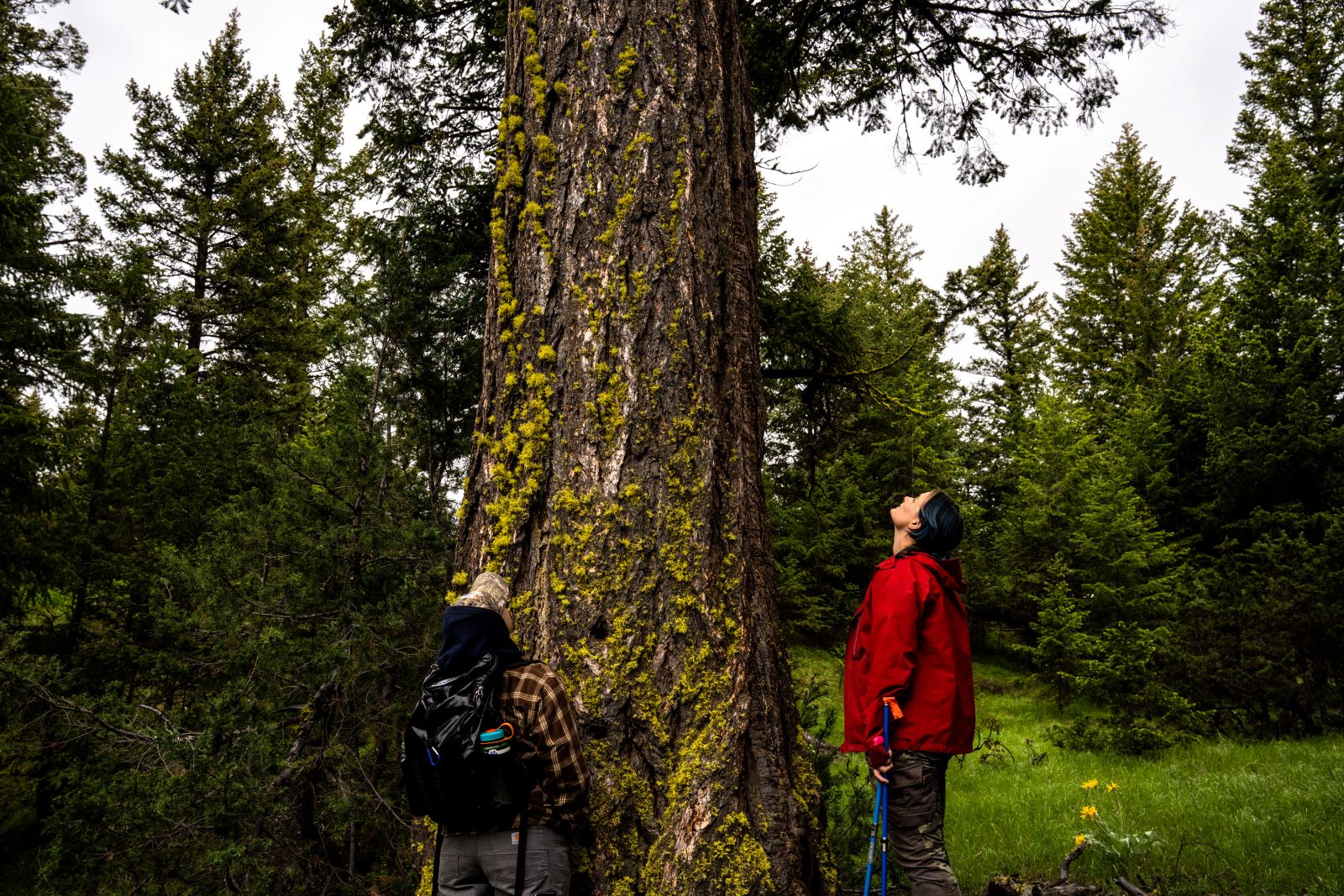
Photo by Mya Van Woudenberg/Sierra Club BC.
FOR IMMEDIATE RELEASE
UNCEDED xʷməθkʷəy̓əm (MUSQUEAM), Sḵwx̱wú7mesh (SQUAMISH) AND səlilwətaɬ (TSLEIL-WAUTUTH) TERRITORIES/VANCOUVER – In light of historically low snowpack levels and severe drought risks across B.C., Sierra Club BC is calling on all levels of government to speed up interim and long-term conservation solutions for old growth and forest stewardship reforms to reduce the extreme impacts of climate change on communities and biodiversity.
Recent provincial announcements tied to increasing protection and improving forest stewardship are promising but have not yet resulted in significant change on the ground. According to B.C.’s River Forecast Centre, snow levels are currently 39 per cent below normal. There is widespread concern that this will result in increased risks of drought and wildfires in 2024. Last year, wildfires burned across more than five per cent of forests in B.C., and more than 100 of those fires are still smoldering.
Old growth and older forests reduce the risks of severe climate impacts like drought, wildfires, flooding, heatwaves and landslides while industrially degraded landscapes and clearcut logging make them worse.
“The last old-growth forests on Earth are a global treasure for biodiversity and a legacy for future generations. Today they are also part of our last defense against the escalating impacts of the climate crisis,“ said Jens Wieting, Senior Policy and Science Advisor at Sierra Club BC. “The long-term value of our remaining intact forests and their ability to protect communities from climate disasters is now greater than ever before, especially when compared to the short-term profits from clearcutting old growth.”
Old-growth forests retain water, keep creeks flowing, lower temperatures during heatwaves, are less prone to fire than younger forests and offer refuge for threatened species. They also store huge amounts of carbon, much of which gets released into the atmosphere after a clearcut, making climate change even worse.
Several initiatives tied to increasing protection and making biodiversity a priority in B.C. were announced towards the end of 2023: a B.C. conservation financing mechanism, a draft Biodiversity and Ecosystem Health framework, and the Nature Agreement between the First Nations Leadership Council and the federal and provincial governments. But these announcements have not yet resulted in tangible change on the ground.
“The recent conservation announcements contained all the key ingredients to make headway in safeguarding the most at-risk ecosystems and species habitat in B.C. What’s needed now is leadership at every level and in every ministry to protect these values before we lose more irreplaceable benefits,” said Shelley Luce, Campaigns Director at Sierra Club BC.
Major concerns include that less than half of the old -growth forests recommended for logging deferrals by the provincial Technical Advisory Panel in 2021 have been deferred and delays in introducing science-based old-growth targets that would ensure the most critical forests are protected.
Right now, the B.C. government has an opportunity to speed up logging deferrals, the implementation of old-growth targets and other improvements in forest stewardship as part of their yet-to-be-released Old Growth Action Plan with updated milestone dates and timelines.
“Premier Eby was right when he said that forests in B.C. are exhausted. It may take a long time for these lands to recover from decades of industrial degradation. But it doesn’t have to take many years to protect the last old growth and to reform forest stewardship in B.C. Doing the work now will be paramount for the future of communities and the web of life,” said Wieting.
-30-
Background
For more information about the relationship between industrial logging and the severity of climate impacts, please see the Sierra Club BC report ‘Intact forests, safe communities.’
Media contacts
Shelley Luce, Director of Campaigns and Programs | Sierra Club BC
shelley@sierraclub.bc.ca
Jens Wieting, Senior Policy and Science Advisor | Sierra Club BC
jens@sierraclub.bc.ca