Orbweaving Spiders
Araneidae
Appearance
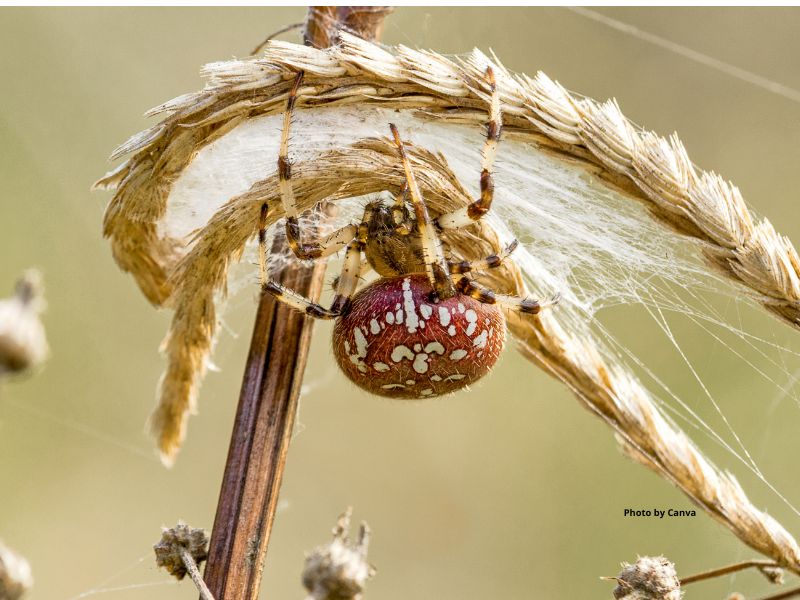
These arachnids come in a wide variety of shapes, sizes, textures, and color patterns. Some are up to 20cm long, some have spikes, and some can even make silk that shines like gold in the sunlight. Despite these differences, they all have one thing in common – they weave orbs!
Range & Habitat
Orbweavers are a fascinating type of spider commonly found throughout British Columbia, yet they can be found throughout the globe – from your very own BC backyard to the lush Amazon Rainforest in Ecuador.
Reciprocal Relationships
These spiders' sticky, spiral-shaped webs provide wonderful insight into the gifts they share. Even though orbweavers have 8 eyes, they are practically blind, and the webs they weave act as an extension of the spider's senses. Webs have been thought to help communication between spiders. These webs display the patience and concentration of orbweavers as they can take hours to make and seconds to destroy. Webs are multipurpose and function as a home, a trap for prey, and a protector of eggs.
Like many other spiders, orbweavers only bite humans if they are in danger. These bites have very mild toxins that are typically not harmful to humans but do help spiders immobilize insects for consumption. If a human is bitten, at most, there is a mild bug bite. Despite this, many people are quick to kill the orbweaver due to arachnophobia or a lack of understanding.
Since there are thousands of species of orbweavers, they act as an important component of the food chain. Spiders prey on many flies, mosquitoes, or other flying insects, which help maintain balance within our ecosystems. These flying insects might damage or otherwise harm flowers that other pollinators need. Furthermore, mosquitoes and other flying insects can carry diseases, and their consumption by spiders can reduce disease transmission.
Like many other spiders, orbweavers only bite humans if they are in danger. These bites have very mild toxins that are typically not harmful to humans but do help spiders immobilize insects for consumption. If a human is bitten, at most, there is a mild bug bite. Despite this, many people are quick to kill the orbweaver due to arachnophobia or a lack of understanding.
Since there are thousands of species of orbweavers, they act as an important component of the food chain. Spiders prey on many flies, mosquitoes, or other flying insects, which help maintain balance within our ecosystems. These flying insects might damage or otherwise harm flowers that other pollinators need. Furthermore, mosquitoes and other flying insects can carry diseases, and their consumption by spiders can reduce disease transmission.
More information
If you belong to a First Nation with a story or piece of information not represented here and you would like to share more about this species, please email us at education@sierraclub.bc.ca.